Use this recipe as a modular prompt lesson. Start with the subject, add one readable pose, then layer clothing, scene, camera, lighting, mood, and style. The prompt fragments stay in English so they can be copied directly into most image models.
Positive Prompt
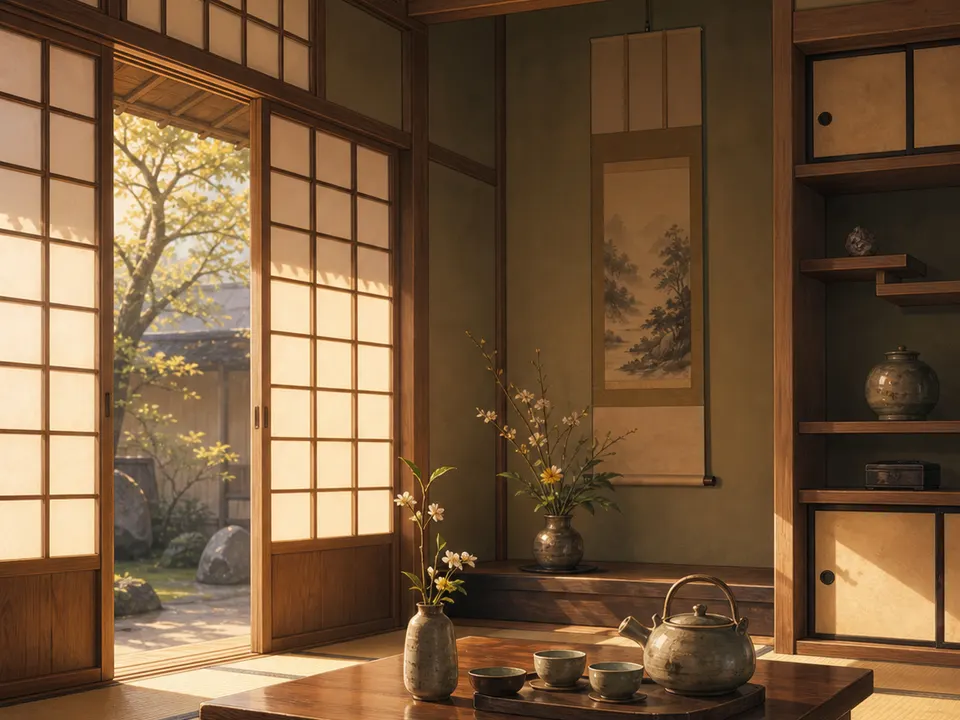
quiet tea house interior with no people, balanced room layout with central table, steam rising gently from a teapot, woven cushions, ceramic cups, folded cloth details, wood beams, tatami-like mats, garden view, clean shelves, wide interior shot, straight verticals, morning sunlight through paper screens, serene, welcoming, uncluttered, architectural concept art, refined texture study, clean composition, coherent anatomy, detailed materials, balanced colors, polished illustration
Negative Prompt
low quality, blurry, extra fingers, deformed hands, unreadable details, harsh artifacts, watermark, text overlay
golden hour rim light, warm edge highlights, soft long shadows
Source: Traditional Tea House Interior
Style
Variation: watercolor
watercolor illustration, textured paper grain, gentle color washes
Source: Traditional Tea House Interior
Camera
Variation: wider framing
wide shot, more background context, subject placed on rule-of-thirds line
Source: Traditional Tea House Interior
Use this recipe as a modular prompt lesson. Start with the subject, add one readable pose, then layer clothing, scene, camera, lighting, mood, and style. The prompt fragments stay in English so they can be copied directly into most image models.
Common Mistakes
Combining close-up and full body framing in the same prompt.
Adding many style directions that fight for visual priority.
Using vague words such as beautiful without concrete visual detail.