Prompt Guide
How to Write Prompts for Interior Spaces
Learn how to write AI prompts for rooms and interiors using layout, furniture, materials, lighting, and atmosphere.
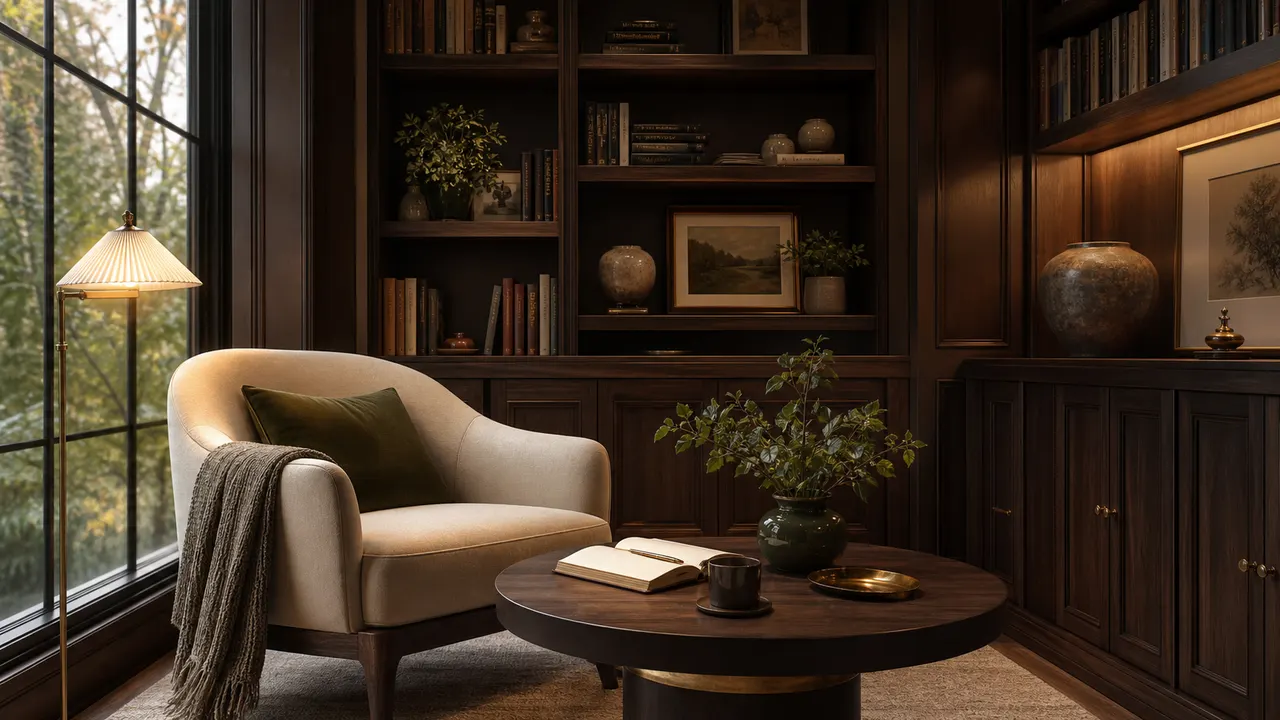
Interior prompts work best when they describe room type, layout, materials, light source, and one focal point.
Interior prompts need structure. A room is not just a background. It has layout, furniture, materials, light, and mood.
Start with the room type:
small reading room
Then add style or function:
quiet reading room with built-in wooden shelves
Next, describe the main furniture or focal point:
a low armchair beside a round table
Then add materials and lighting:
dark wood, cream fabric, warm lamp light
A full prompt might be:
a quiet reading room with built-in wooden shelves, a low armchair beside a round table, dark wood and cream fabric, warm lamp light, calm evening atmosphere
Do not describe every object in the room. Choose one focal point and a few supporting details. Too many chairs, lamps, shelves, plants, paintings, windows, rugs, and decorations can make the image crowded.
Layout words are useful. Try centered, symmetrical, corner view, open layout, narrow room, high ceiling, low ceiling, deep hallway, or view through doorway.
Lighting is important for interiors. Window light creates a natural look. Lamp light creates warmth. Overhead light can feel flat. Neon light creates a modern or cyberpunk mood. Candlelight works for historical or intimate rooms.
Material choices also define the space. Wood, stone, concrete, paper screens, metal, velvet, glass, and plaster each create a different atmosphere.
A useful structure is:
[room type] + [layout] + [main furniture] + [materials] + [lighting] + [atmosphere]
Interior prompts should be organized. The model needs to understand both the space and the focal point.